
Lonicera sempervirens
Coral Honeysuckle
Family: Caprifoliaceae
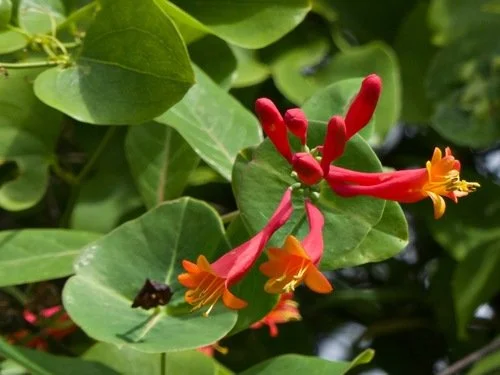
Evergreen vine in the low desert reaching up to 20’ tall. This vine has showy, trumpet-shaped flowers, red outside with a yellow throat, in several whorled clusters at the ends of the stems. Flowers are followed by small red fruits.
Plant in morning sun/afternoon shade, or bright shade. Moderate to regular water is best. Hardy to -30°F. Will lose leaves in the single digits °F. Needs to be attached to a substrate (like a trelllis).
This species is very similar to Lonicera arizonica and is often sold as that species, but L. arizonica is not easy to grow at lower elevations. This species has all the same wildlife benefits, and virtually identical flowers, but is much easier to cultivate at low elevations.
Pollinated by hummingbirds. Many fruit eating birds will eat the fruits. It hosts the caterpillars of spring azures and snowberry clearwing moths.
Lonicera is named for the 16th century German botanist, physicist and herbalist Adam Lonitzer. The name sempervirens comes from two words: semper means “always” in Latin, and virens comes from the Latin viridis, which means “green.”
Common in eastern North America, but has occurred as far west as Texas. It is found prominently in the southeastern United States.

Flower detail of Jacquemontia pringlei, photo by Eric Hough, iNaturalist
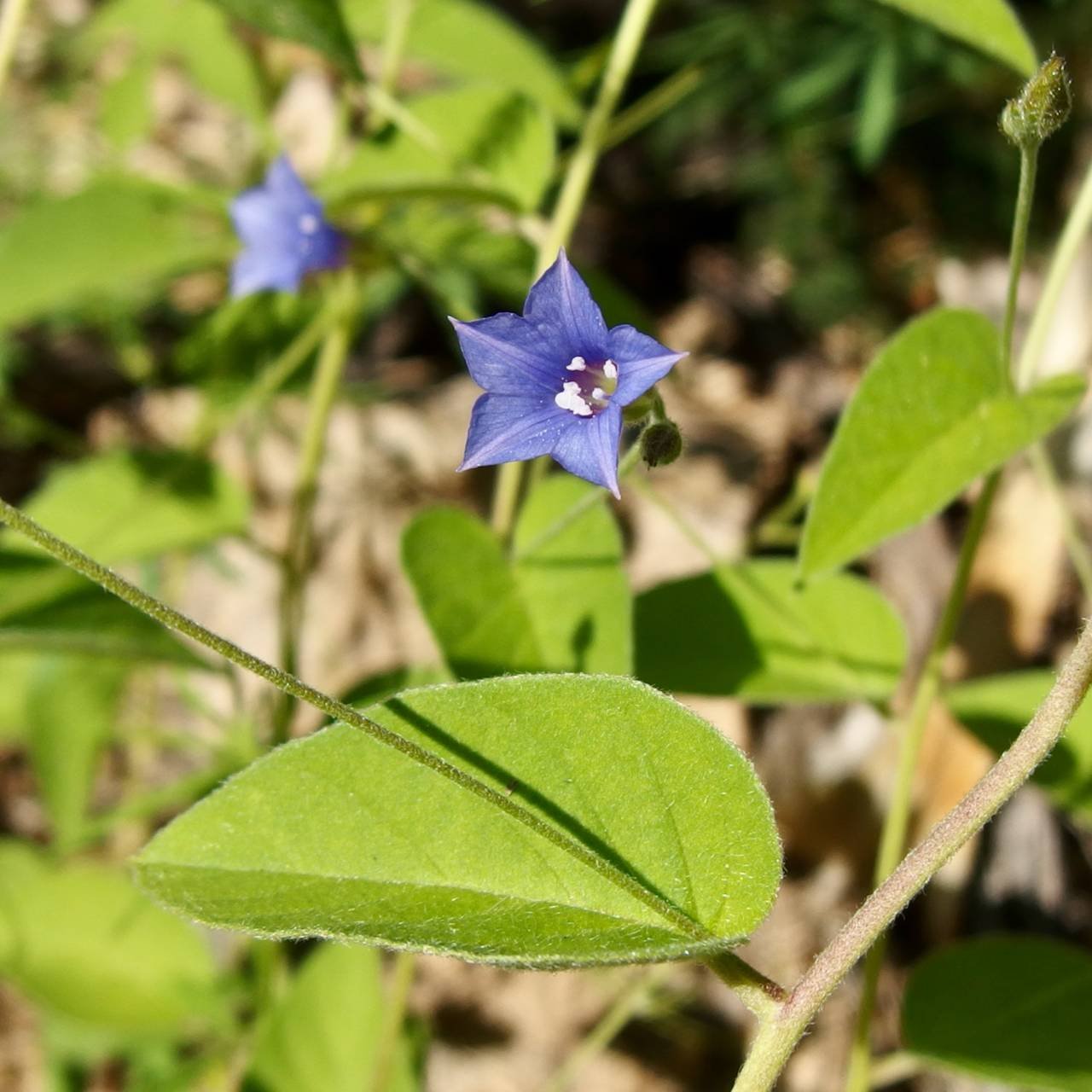
Another species, Jaquemontia agrestis, occurs only in a few spots in the state (in the Santa Rita, Atascosa, and Baboquivari mountains in southern Arizona). The flower is a smaller blueish flower. This one tends to like disturbed locations, especially where its found in Mexico. Photo by Sue Carnahan, SEINET