
Desert Mountain Manihot
Manihot angustiloba
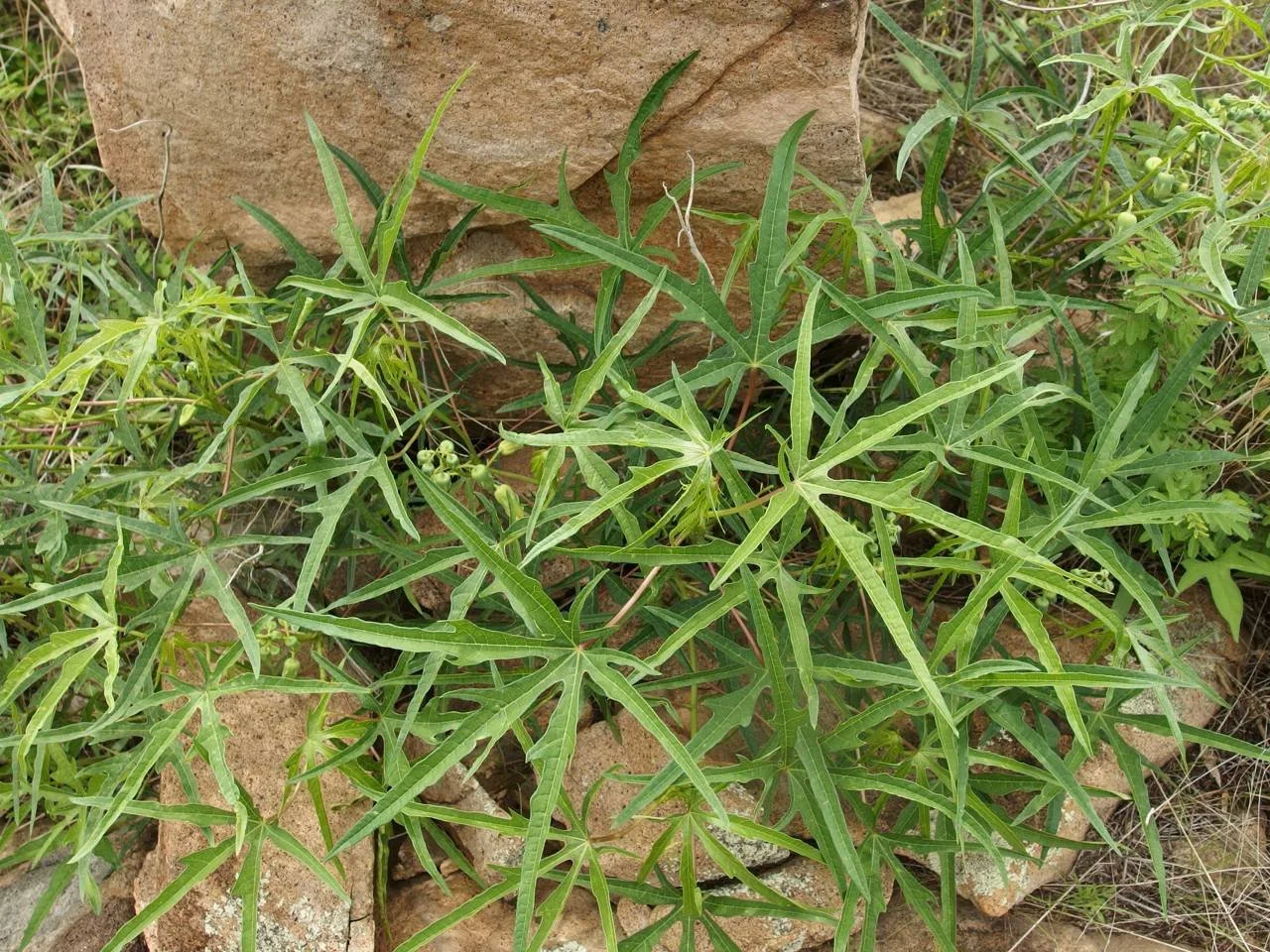
Family: Euphorbiaceae
Deciduous, succulent shrub that can reach 6’ or more tall, emerging from tuberous roots. Plant yields latex when damaged. Plants go dormant in winter and re-emerge in the spring from tuberous roots. They flower in summer, into fall, with green and yellow flowers followed by capsules with large seeds.
Plants thrive in rocky, well-drained soils (often growing between boulders in the wild). Part to filtered sun is ideal in the low desert, though they can acclimate to full sun. Moderate to low water depending on the depth of the soil. Hardiness untested but have been observed to take temperatures in the low 20s/high teens °F.
Larval host for several moth species.
This species is related to cassava (Manihot esculenta) and is considered an important wild relative for breeding desired traits into that domestic crop. The foliage has been used as food, though not recommended to be consumed in large quantities.
There are about 160 species of Manihot native to the Americas, from Arizona in the United States south to Argentina and Uruguay.The genus name, Manihot, comes from manioc, a reference to the domesticated species of this genus (Manihot esculenta) while angustiloba means having narrow lobes, referring to the foliage.
Photo by Sue Carnahan, SEINET
Manihot angustiloba on iNaturalist
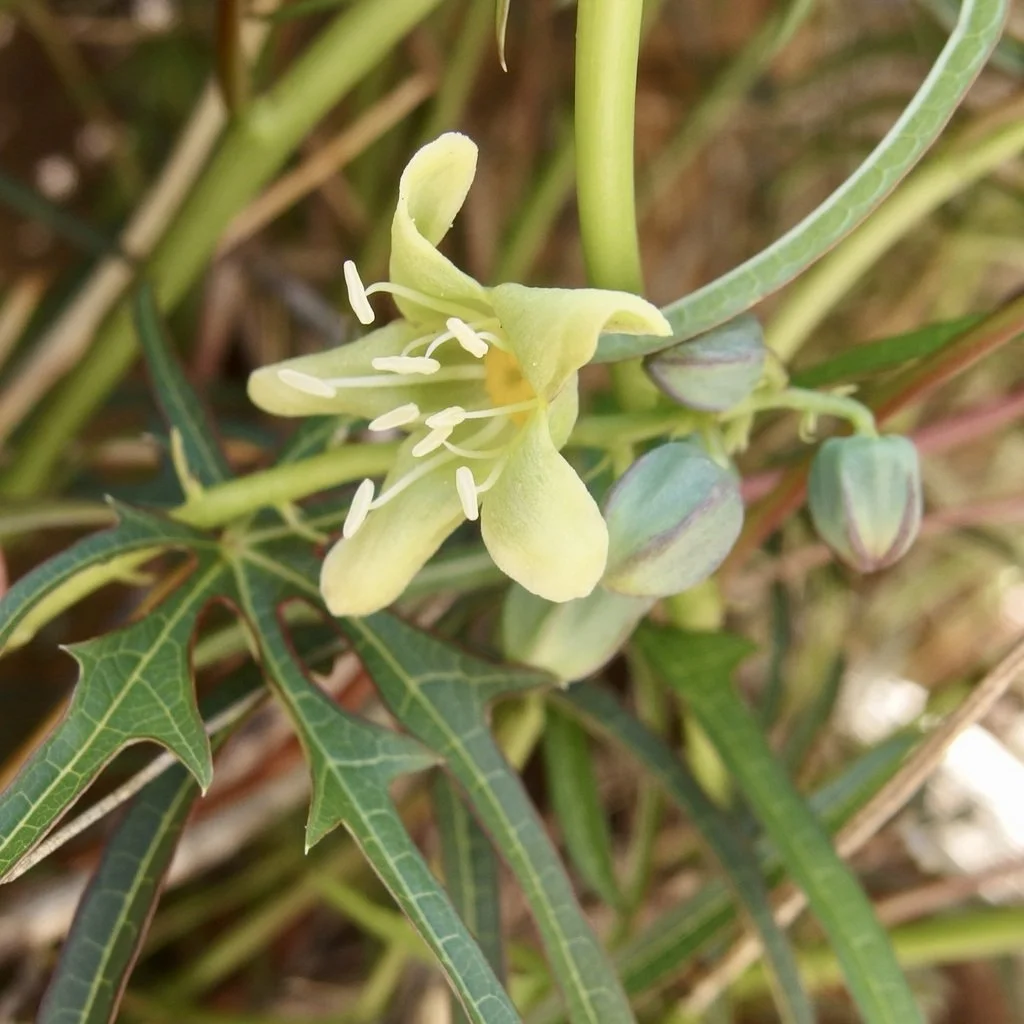
Flower, image by Sue Carnahan, iNaturalist
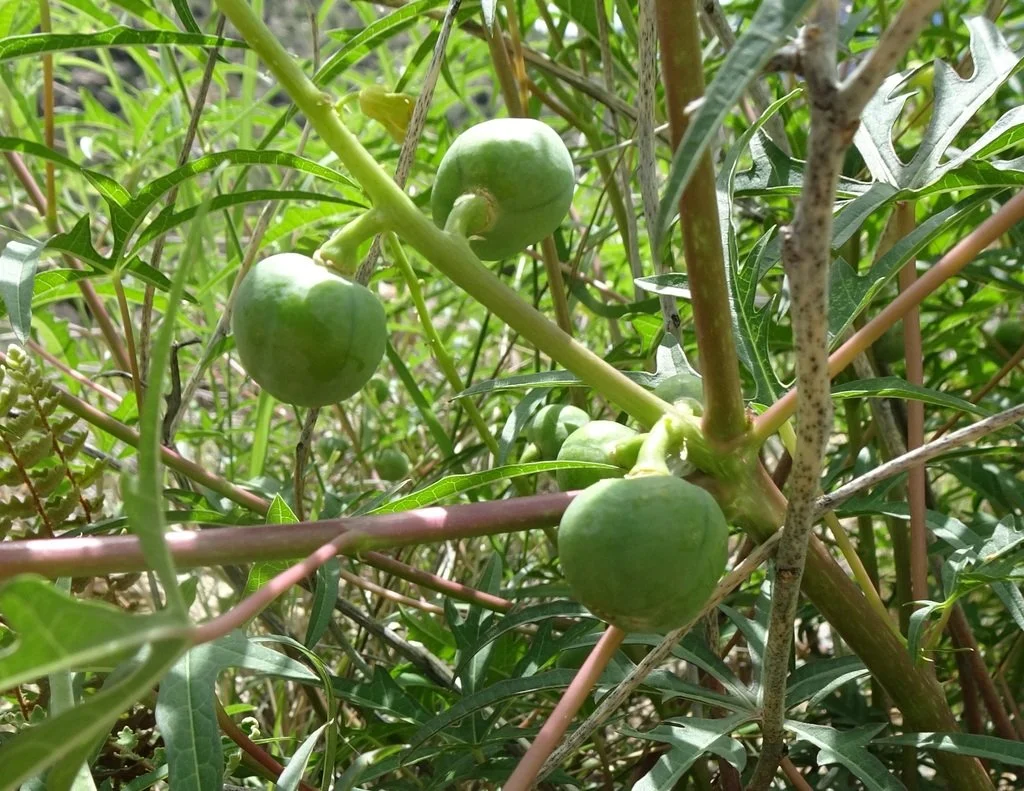
Green fruits, image by ethan-k on iNaturalist