
Dayflower
Commelina species
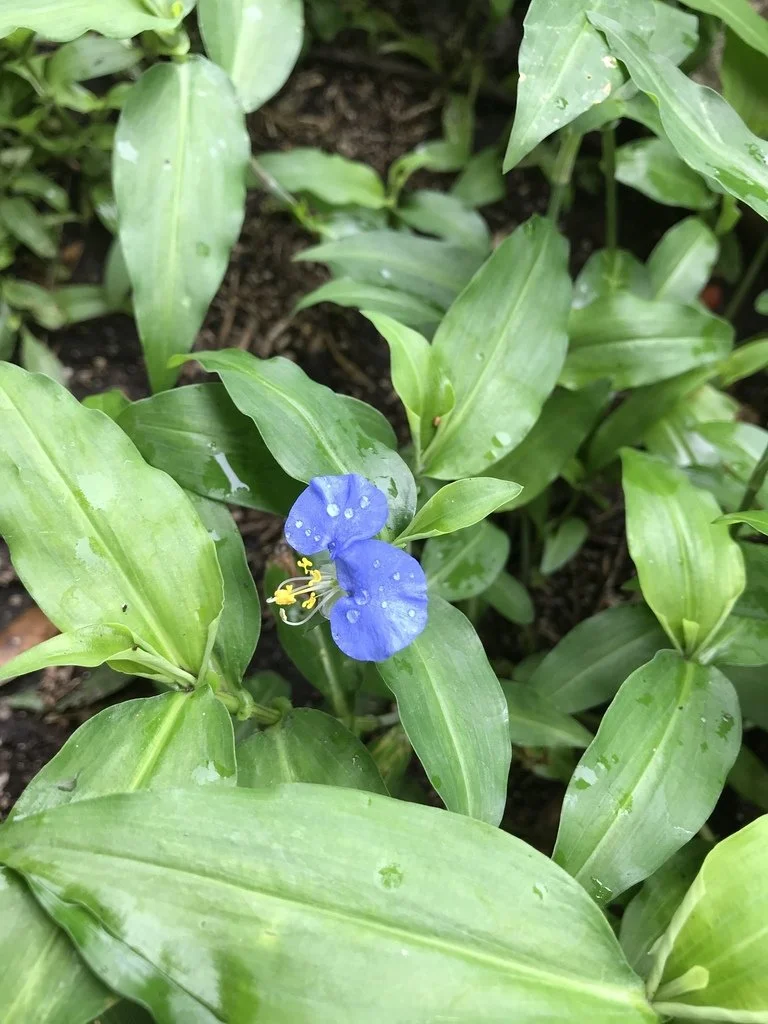
Family: Commelinaceae
There are 227 accepted species of Commelina. Due to the thread-like secretion that emerges when the stem is cut and the brief flowering time, the genus is also known as spiderwort. The genus has a global distribution.
Plants are easy to grow, even weedy as they volunteer often in the landscape. Plant in part sun, or even shade. Can take full sun if given enough moisture. Moderate to regular water. Plants are very cold hardy but go dormant in winter below freezing temperatures.
Bees visit the flowers.
Commelina honors the Dutch botanists Jan (1629-1692) and nephew Caspar (1667-1731) Commelijn.
There are many documented medicinal uses for the genus.
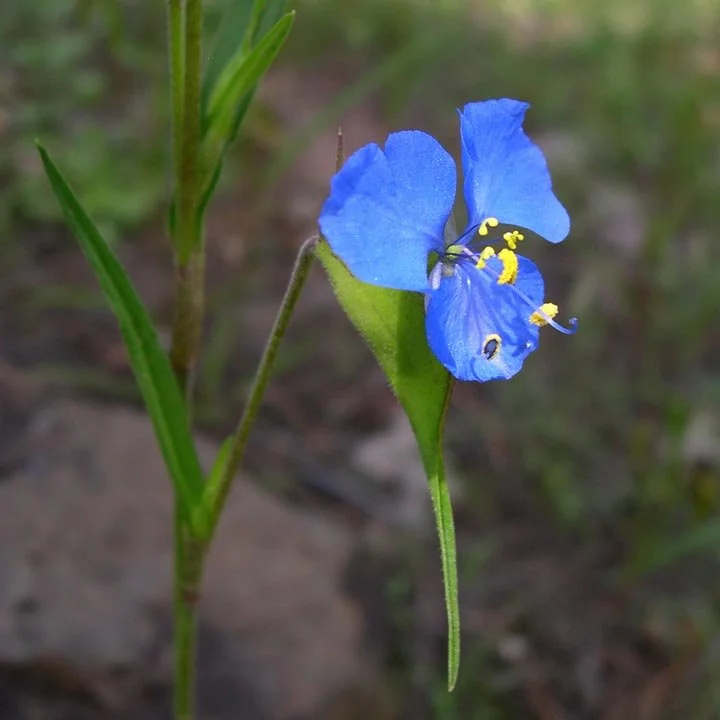
Bird Bill Dayflower
Commelina dianthifolia
Herbaceous perennial growing to about a foot or so tall. Very slender foliage distinguishes this species from the more common D. erecta. The flowers, which each last only a day, have all blue petals.
The species name, dianthifolia, means foliage like Dianthus.
Found in open meadows, often on granitic soils; 4,000-9,500’ in Arizona, southern Colorado, New Mexico, southwestern Texas; south into southern Mexico.
Photo by Max Licher, SEINET
Commelina dianthifolia on iNaturalist
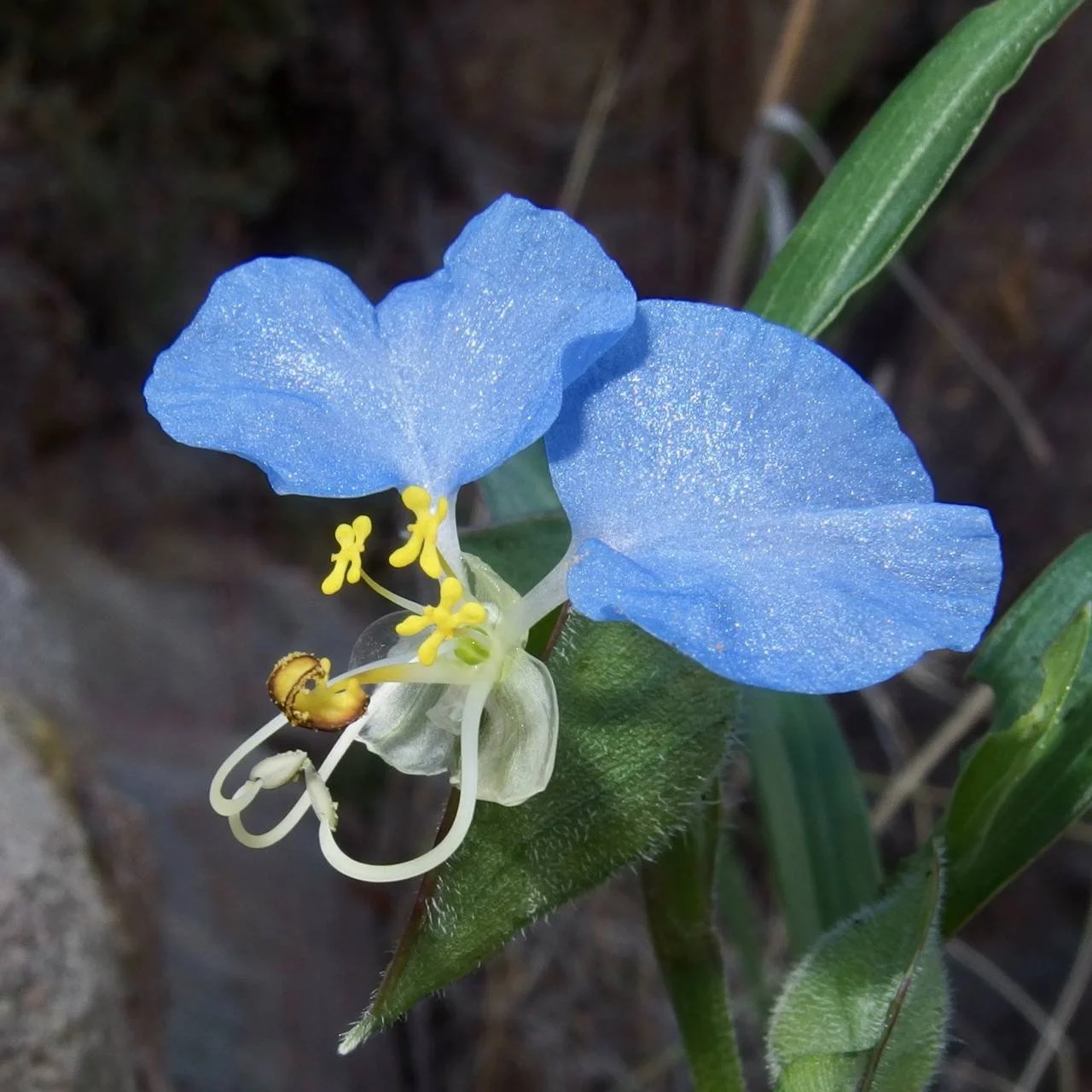
White-Mouthed Dayflower
Commelina erecta
Herbaceous perennial growing to almost 2’ tall though usually about a foot tall. Evergreen when frost is not present, but may freeze to the ground in winter, emerging from the roots in warm weather. The two larger blue petals are located at the top of the plant with the third white petal in between and below them. Each flower only lasts for a Day earning it the nickname the Dayflower. However, the buds on the plant continue to be produced increasing the individual plant’s time in blossom. This is, by far, the most common in the trade.
The species name erecta refers to the plant's usually upright growth form.
Found in grasslands to meadows in mesquite woodlands to pine forests on granitic and limestone soils, from 3,000-7,500 ft throughout most of the United States, including in Arizona, south through Mexico, Central America and the Carribean.
Photo by Sue Carnahan, SEINET
Commelina erecta on iNaturalist