
Cochise Sedge
Carex ultra
Family: Cyperaceae
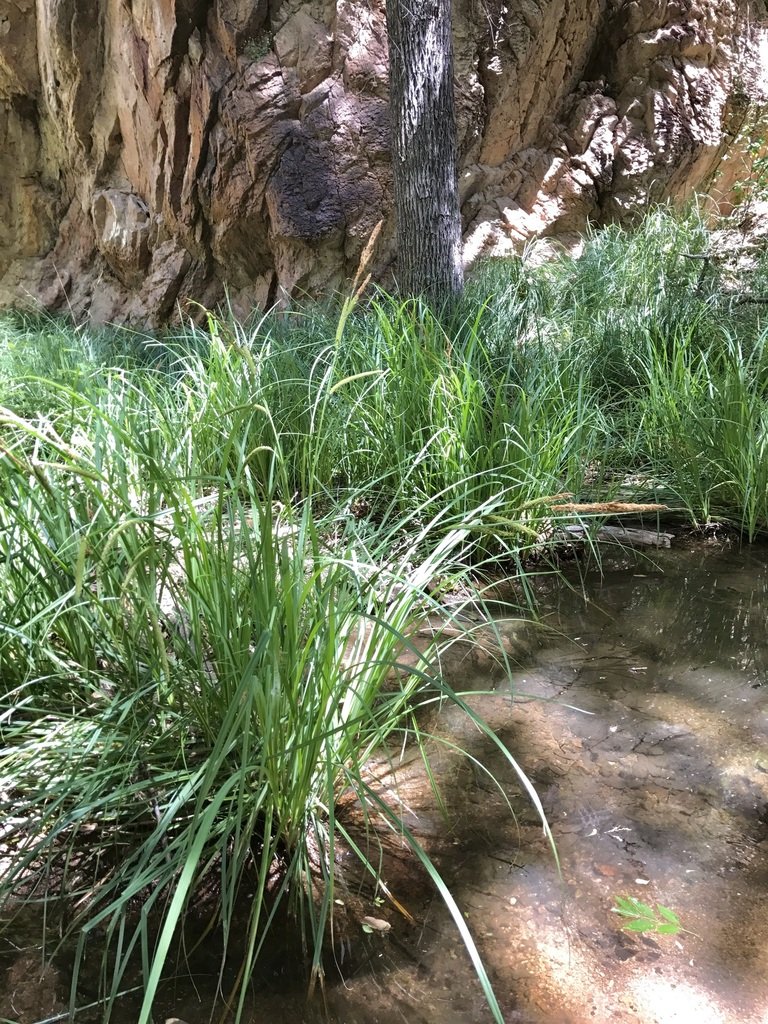
This grasslike sedge is the largest sedge in the southwest and one of the largest in the world, reaching 6’ or more, though often found at about 3’ tall or so. Its inflorescence is usually also robust, with several long terminal staminate spikes and several long lateral pistillate spikes. This plant spreads in moist soils with stout, creeping rhizomes. Flower spikes are unisexual (separate female and male inflorescences).
Plants are often found in canyons, so part sun is the best location for this species, though it can take full sun if it gets enough water. Plants are riparian and grow in consistently moist soils, so usually planted in the margins of ponds or in flowing water conditions like found in hydro/aquaponics systems. Hardiness untested, but found as high as 6000’ in elevation.
Sedges and rushes are very important for soil conservation and have important soil biology relationships that we’ve only just begun to understand. The plants produce seed eaten by many birds and other organisms.
There is little documentation about the human use of this sedge, but it was most likely used in basketmaking by indigenous communities, as many sedges are.
Found in moist soils that are sandy to gravelly, or in marshy sites from 5,000-6,000 ft mostly in Arizona but also in adjacent New Mexico, Sonora, and Chihuahua.
There are 2108 accepted species in the genus Carex, which is the classical Latin name for the genus, while ultra is Latin for beyond or in excess, probably a reference to its size. Carex species are found across the world, mostly in wetland regions.
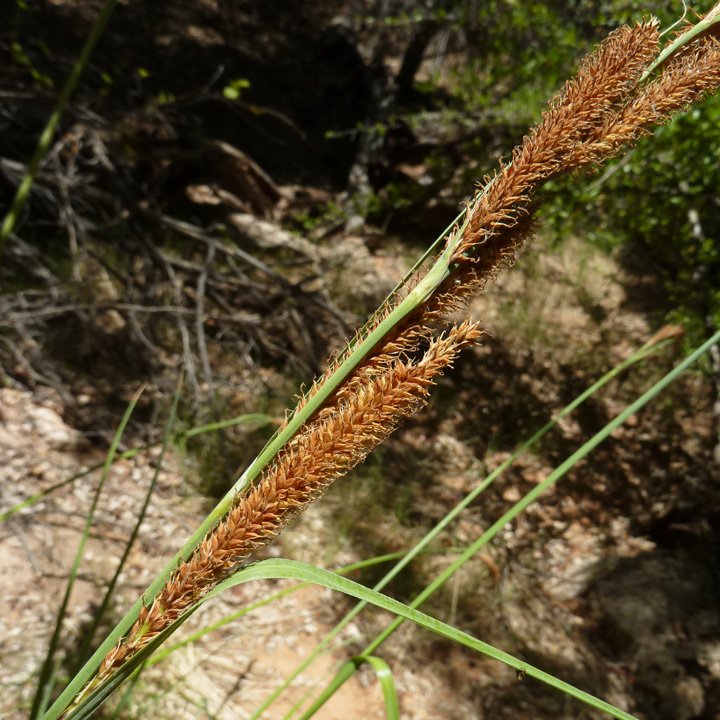
Dry inflorescence, photo by Max Licher, SEINET
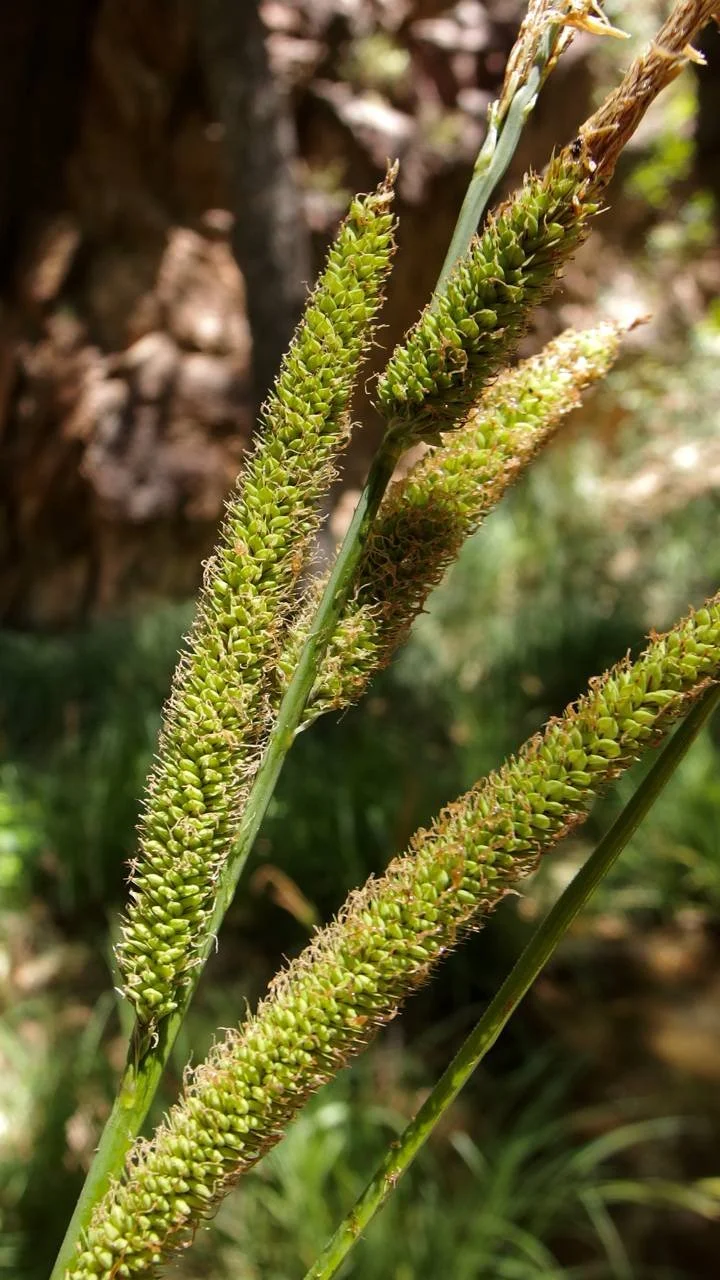
Green inflorescence, photo by Sue Carnahan, SEINET