
Euphorbia antisyphyllitica
Candelilla
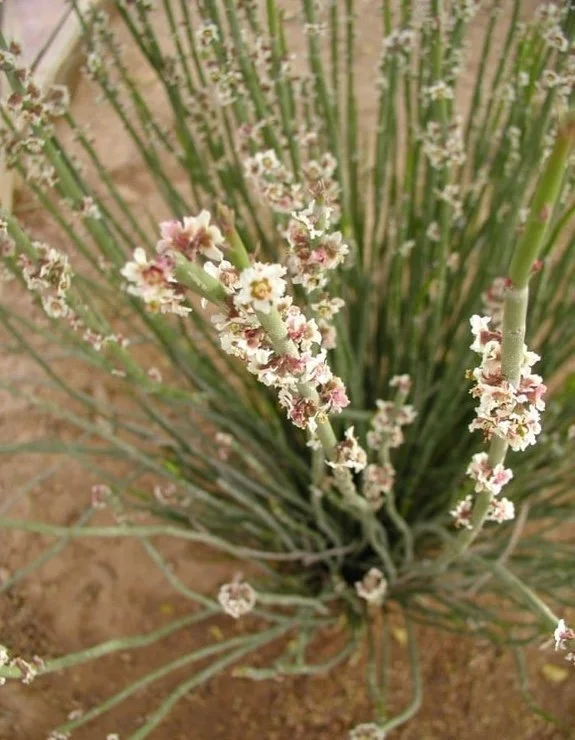
Succulent, essentially leafless stems rise up about 2-3’ wide and get at least 3’ wide though plants can sucker and spread almost indefinitely. In full sun, a white, waxy epidermis forms on the succulent green stems (functional for sun protection). As with all Euphorbia species, this species exudes a white sap when damaged. Spring into summer, small white “flowers” with pink to red throats bloom (in Euphorbias, the “flowers are called cyanthia). The fruit is an oblong to ovoid, three-lobed capsule that splits explosively when ripe, ejecting whitish-grey seeds.
Grows in full to part sun, low water is needed—though extra water in summer will encourage growth and spreading. In less hot, shady locations, the stems may be more green than grayish white. Hardy to 0°F.
Euphorbia antisyphilitica is primarily pollinated by insects, including butterflies and especially small bees, which are attracted to the nectar secreted by the glands surrounding the cyathia. The plant is monoecious, bearing both male and female flowers within the same cyathium, though insect pollination facilitates outcrossing and genetic diversity.
Plants have a historical medicinal use, particularly for treatment of syphillis, though it is not recommended by most modern herbalists. A high quality wax may be derived from the stems for use in candle making. Candelilla wax is a hard, brittle, yellowish-brown vegetable wax with a high melting point.
Photo by Mountain States Nursery
The genus name Euphorbia honors Euphorbus, a first-century Greek physician who served King Juba II of Mauretania, as the king reportedly named a plant with medicinal properties after him in 12 BCE; this association was later adopted by Carl Linnaeus in 1753 when establishing the genus. The specific epithet antisyphilitica reflects a historical folk-medicine use: the white latex was employed in Mexico as a purported remedy for syphilis and other sexually transmitted diseases. This use is not supported by modern evidence.
Native to the arid regions of the Chihuahuan Desert, encompassing the Trans-Pecos region of Texas and southern New Mexico in the United States, as well as northern Mexico in the states of Chihuahua, Coahuila, Hidalgo, and Querétaro. The species' range has historically been stable yet fragmented, influenced by arid land alterations and intensive commercial harvesting that has led to local population declines or disappearances in some areas.
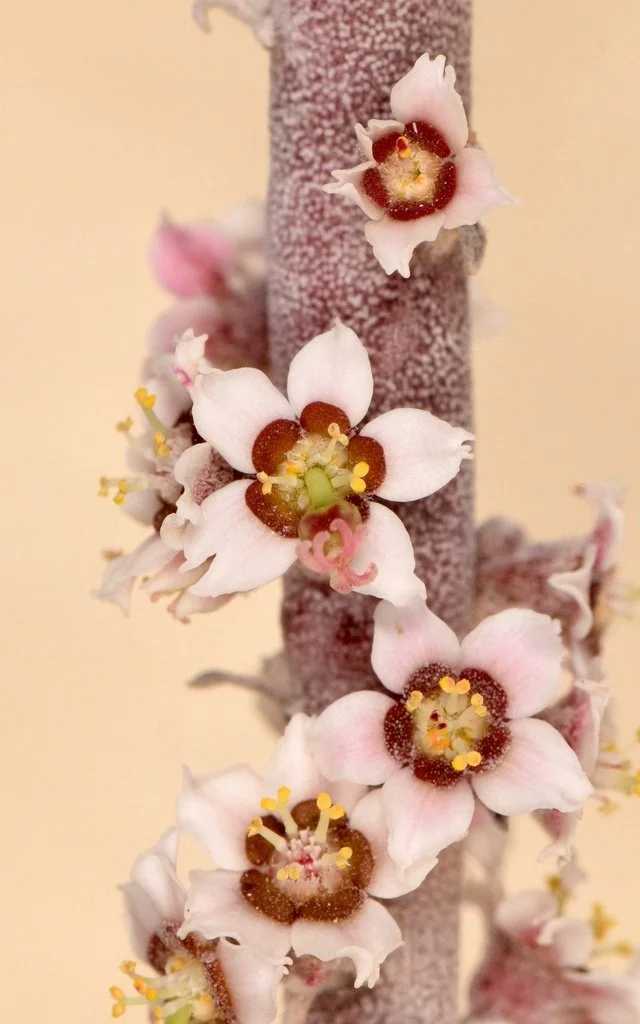
Floral details, photo by Aidan Campos
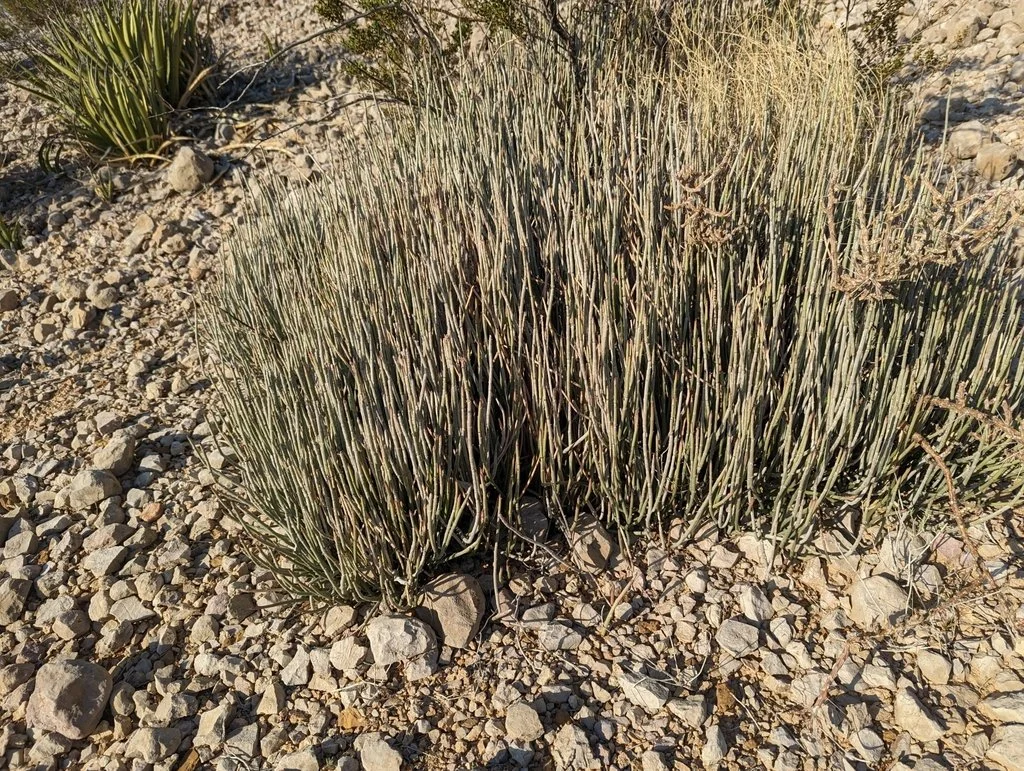
Plants can spread quite wide, photo by Thomas Teggeman
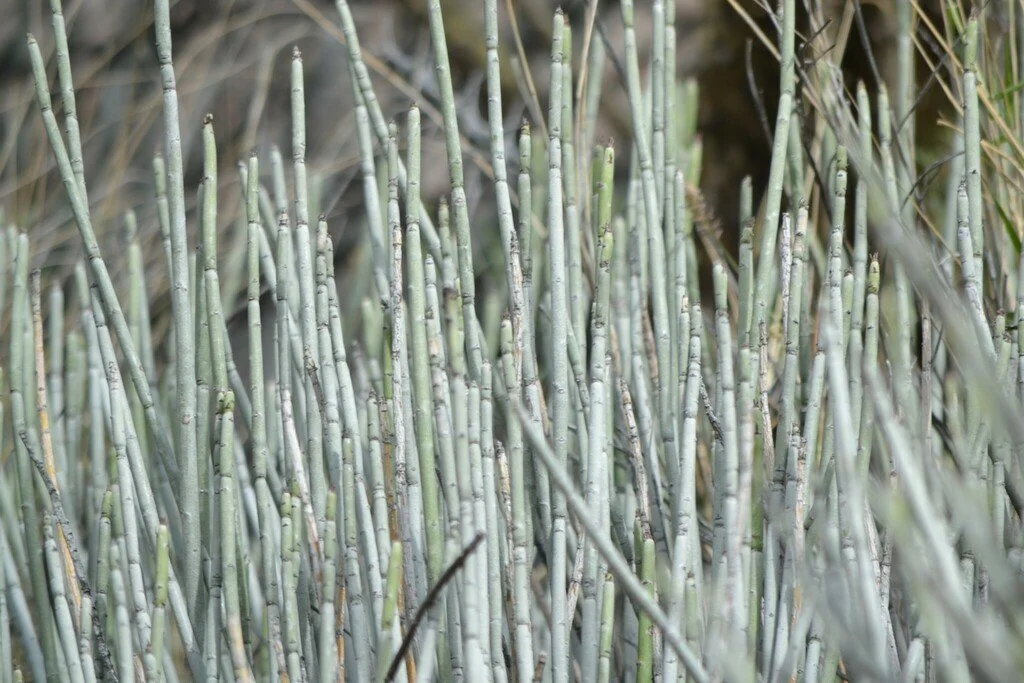
The whiteness of the stems comes from a wax that the plant develops as sun protection, photo by Mauricio Calderón