
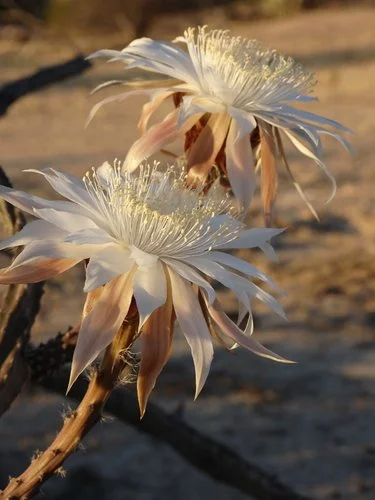
Queen of the Night
Peniocereus greggii
Family: Cactaceae
Slender, branching grey-green stemmed cactus, usually found growing under shrubs and trees (supported by their stems) emerging from fat, tuberous roots. In the wild, plants often look dead, as stems are often brown and desiccated. Usually in early summer large, fragrant, white blooms appear and bloom dusk through early morning. They usually bloom one night a year in June or July. In any given area, they all bloom at the same time, though in recent years (with climate change) bloom times have been less predictable. After flowers, teardrop shaped fruit appear with vibrant red skin and prominent spine tipped areoles.
Grow in well-drained soil, in filtered or part sun. Plants can grow in full sun but will be more beat-up looking. Low water, though some summer irrigation helps plants grow. Hardy into the low 20s, high teens °F, though some tip damage may occur. Multiple plants are required for fruit/seed production (cross pollination). Plants can be found as seed-grown or cutting-grown. Though it is reputed that cutting-grown plants are less likely to produce tubers, we have not noticed this to be true.
Photo by Adrián Soria, iNaturalist
Peniocereus greggii on SEINET
Root taken as a cardiac stimulant, as a salve for sores, for diabetes, the flowers and fruits used for food, roots and stalks were eaten.
Flowers are pollinated by moths. The fruit is eaten by many organisms though fruit eating birds seem to be the best dispersal agents for their seed.
Plants are found in the US (Arizona, New Mexico, Texas) and in Mexico (Chihuahua, Coahuila, Durango, Sonora, and Zacatecas) at elevations of 1,000-3,500’. They tend to be ubiquitous throughout the higher Sonoran Desert area around Tucson.
Tohono Chul in Tucson, Arizona has the largest private collection of Peniocereus greggii. Each summer this botanical garden/museum hosts "Bloom Night", the one night each summer it is predicted the greatest number of cereus flowers will be in bloom, opening from 6pm until midnight to allow guests to stroll the grounds and view the flowers.
The plant was first described as Cereus greggii in 1848 by George Engelmann. Nathaniel Lord Britton and Joseph Nelson Rose placed the species in the genus Peniocereus in 1909. Its name comes from the prefix penio- (from the Latin penis, meaning ‘tail’) and Cereus, the large genus from which it was split. There are 9 accepted species in the genus Peniocereus. The species name greggii honors Josiah Gregg (1806–1850), a merchant, explorer, naturalist, and author of the American Southwest and Northern Mexico.
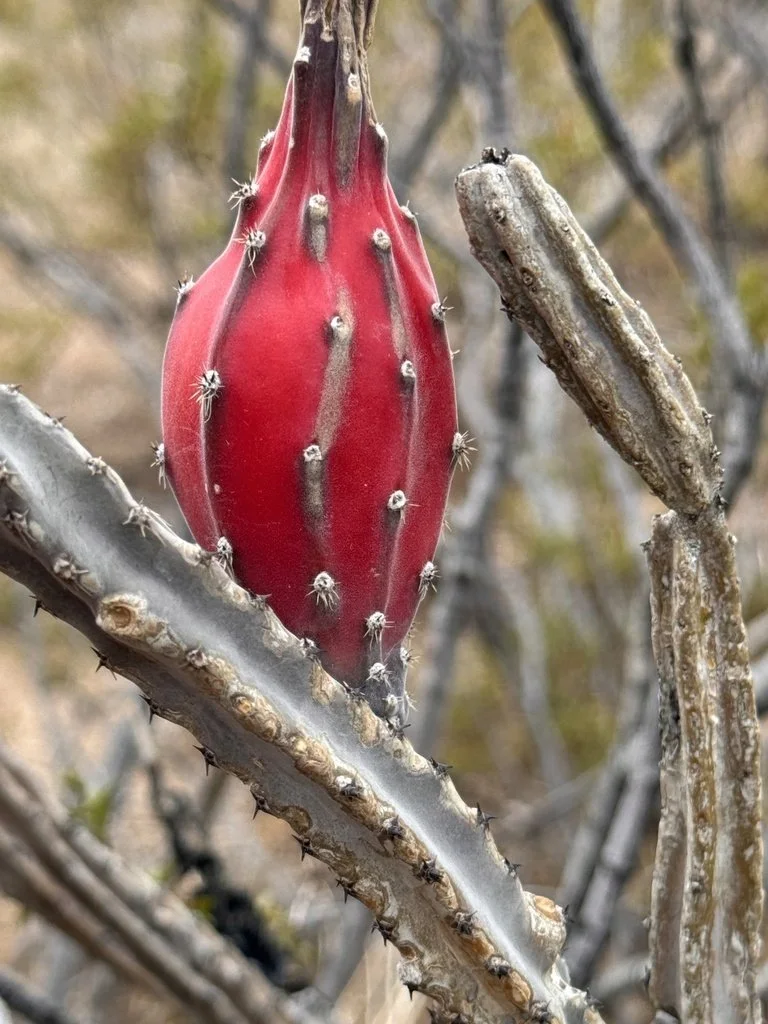
Fruit of Peniocereus greggii, photo by Daniel McNair, iNaturalist
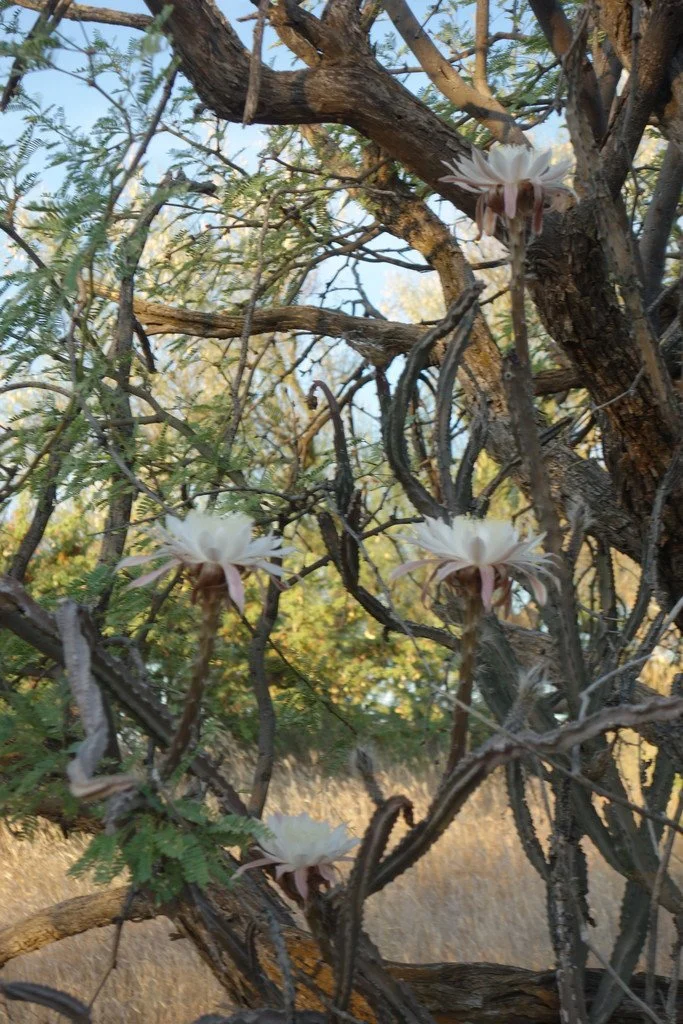
Plants are often found under trees, scrambling up the trunks. Photo by lkalbach on iNaturalist
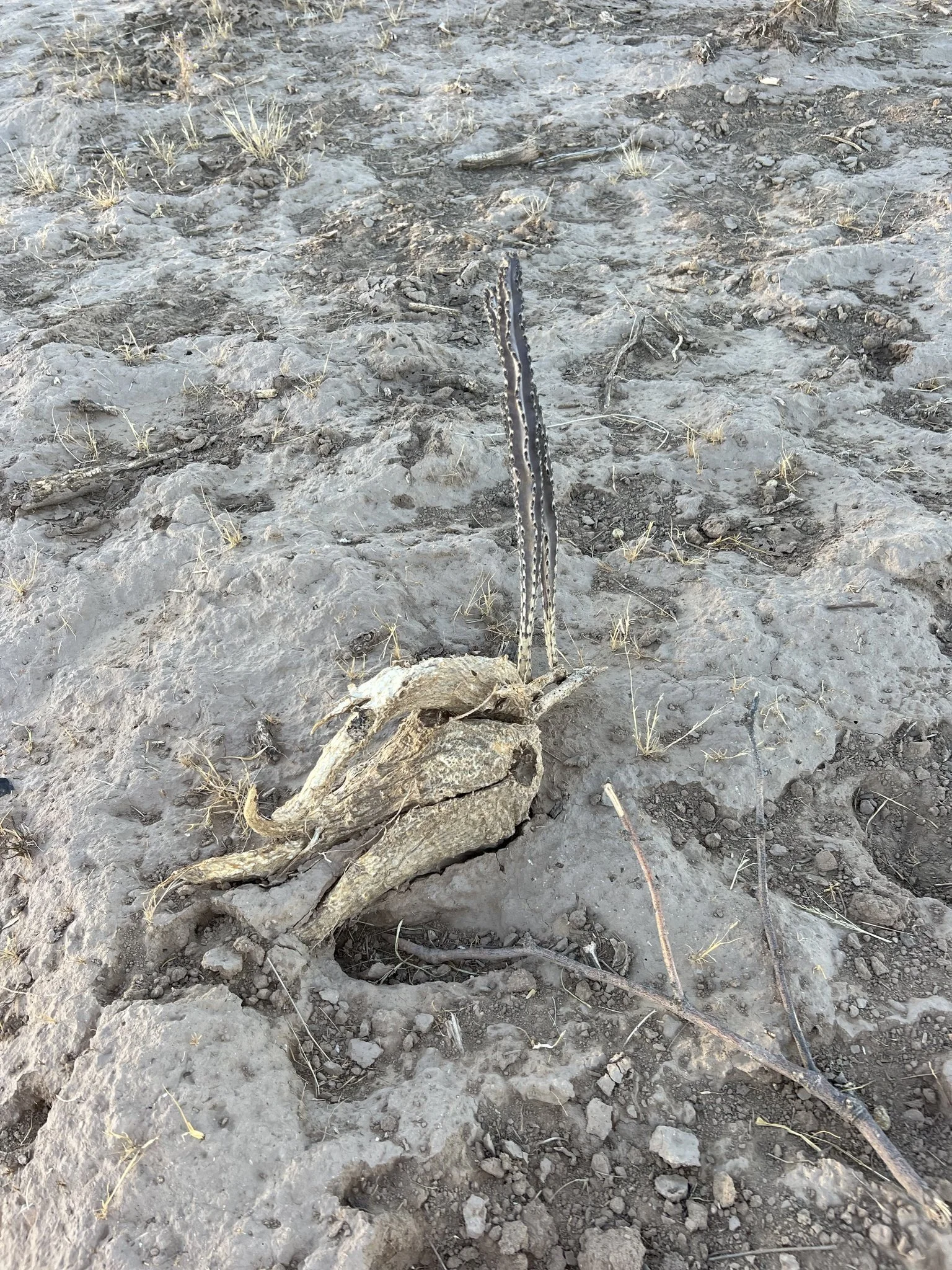
An unearthed plant exposing roots, photo by CK2AZ on iNaturalist
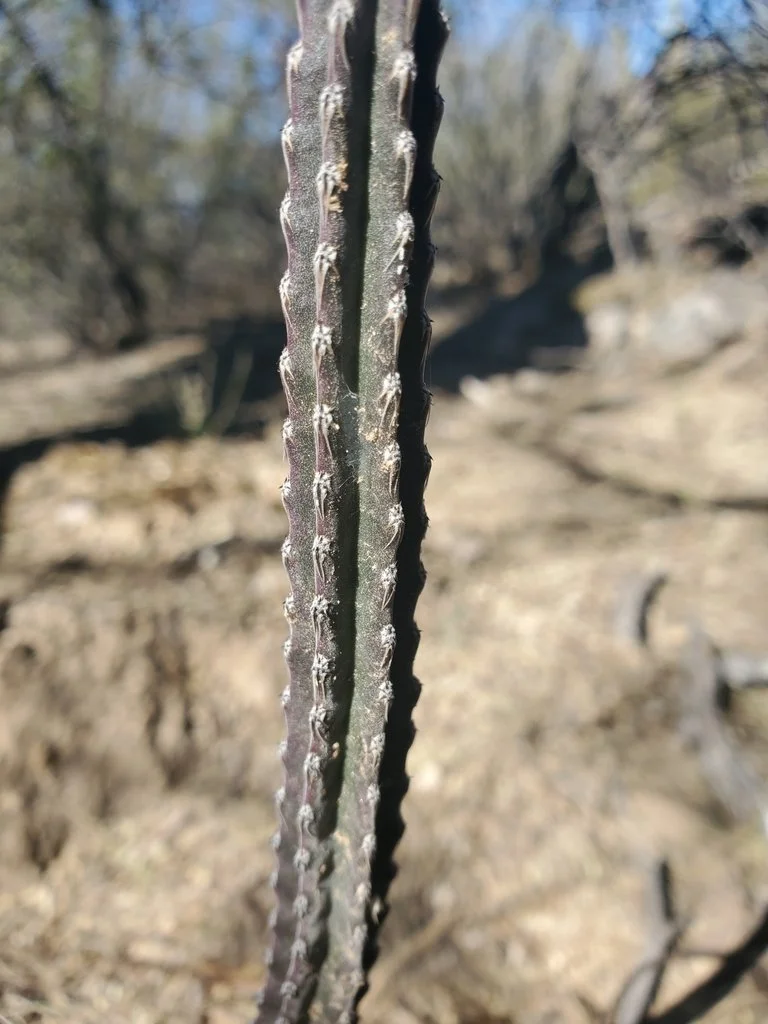
Stem detail, photo by ndutt on iNaturalist